

Capture the castle!
Published
Looking for a place to take the kids for a very special day out – a trip into the past? England is packed with authentic castles, where you aren’t simply learning about history, you’re physically moving through it!
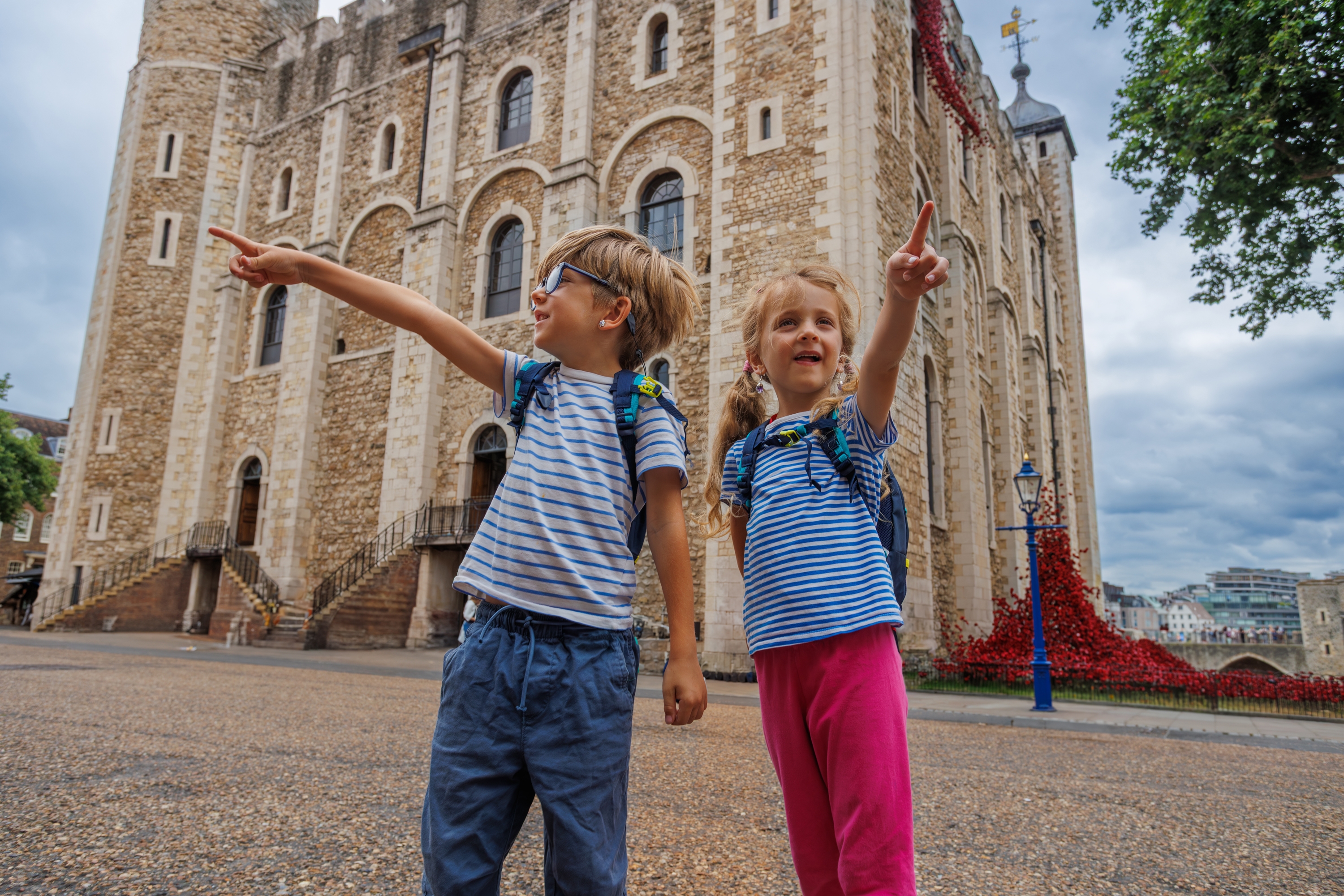
A new ranking by PBSR CO has revealed the castles that offer the most immersive experience of the Middle Ages, based on how much of the original medieval structure and stonework still survives.
Top of the list is the Tower of London which attracted 2.9 million visitors in 2024 alone, but there are castles from Essex to Northumberland which offer a similar immersive experience for families. Here are the top five:
1. Tower of London (Greater London)
11th–13th century
This is one of the most complete surviving medieval castle complexes in the world. At its core stands the White Tower, built by William the Conqueror, where vast sections of original stonework remain intact nearly a millennium later. From narrow spiral staircases worn down by centuries of use to expansive curtain walls and enclosed courtyards, the original layout is still clearly visible. Despite centuries of adaptation, the structure has avoided the kind of heavy reconstruction seen elsewhere, allowing its medieval fabric to remain dominant.
2. Colchester Castle (Essex)
11th century
One of the largest and best-preserved Norman keeps in Europe, this is built on the foundations of a Roman temple. Unlike many castles reduced to ruins, Colchester’s structure remains substantially intact, giving visitors a rare opportunity to experience the scale and solidity of a Norman stronghold, with its thick stone walls, original vaulting and intact layout.
3. Aydon Castle (Northumberland)
14th century
This stands out as one of the most immersive medieval experiences in England precisely because it was never a grand royal fortress. It is actually a fortified manor house, designed for living as much as defence, and it has survived with minimal alteration. Rooms, passageways and courtyards remain strikingly intact, allowing visitors to understand how medieval households functioned day-to-day.
4. Callaly Castle (Northumberland)
14th–15th century
It may be lesser known, but Callaly stands out for its preservation of medieval form. Originating as a pele tower, it has evolved over time yet retains a strong medieval core. The surviving stonework and layout provide an experience that feels personal and immediate, a contrast to larger sites.
5. Stokesay Castle (Shropshire)
13th–14th century
Widely regarded as one of the most complete and best-preserved fortified manor houses in England, its great hall, towers and defensive features remain largely intact, along with the original stonework and layout. Visitors can trace the flow of medieval life through the building, from entrance to hall to private chambers, with minimal disruption from later changes.
Visit PBSR CO