As temperatures drop, parents are searching for hands-on ways to keep kids entertained indoors. Enter the tuff tray - a social media favourite with over 10k tags on Instagram! Not sure where to start? Read on . . .
Published
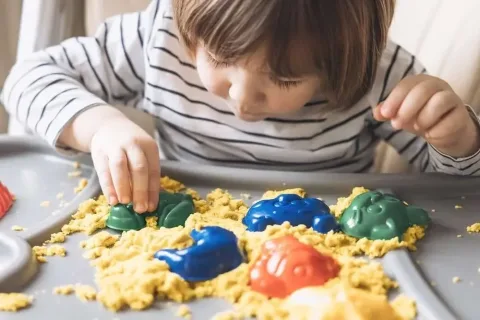
Just in case it’s new to your radar, a tuff tray is a large, shallow plastic tray with raised edges that provides children with a safe space for hands-on exploration and play. It can be filled with materials like sand, water, paint or small toys, allowing children to experiment and create in a controlled environment. Tuff trays are a simple tool for learning, helping children develop fine motor skills, problem-solving abilities, creativity, and social interaction through playful activities.
Magdalena Hajduk, manager of Play Mats Direct, says: ‘From festive winter scenes to sensory play, these budget-friendly setups turn any table into an adventure. Social media is packed with inspiration for tuff trays, with creators sharing endless ideas to keep kids engaged and learning. Accounts like @tufftrayobsessed offer a wealth of creative, easy-to-set-up activities that are both fun and educational. With these resources, families can make the most of their tuff trays.
... tuff trays make learning feel like play! While toddlers scoop, pour, and mix, they’re working on key skills like fine motor control, hand-eye coordination and spatial awareness – important for building independence.
‘For younger children, tuff trays make learning feel like play! While
toddlers scoop, pour, and mix, they’re working on key skills like fine
motor control, hand-eye coordination and spatial awareness – important
for building independence. These activities may support skills for
everyday tasks like feeding themselves or holding a pen. Tuff trays also
encourage social skills as kids share, take turns and chat about what
they’re creating.
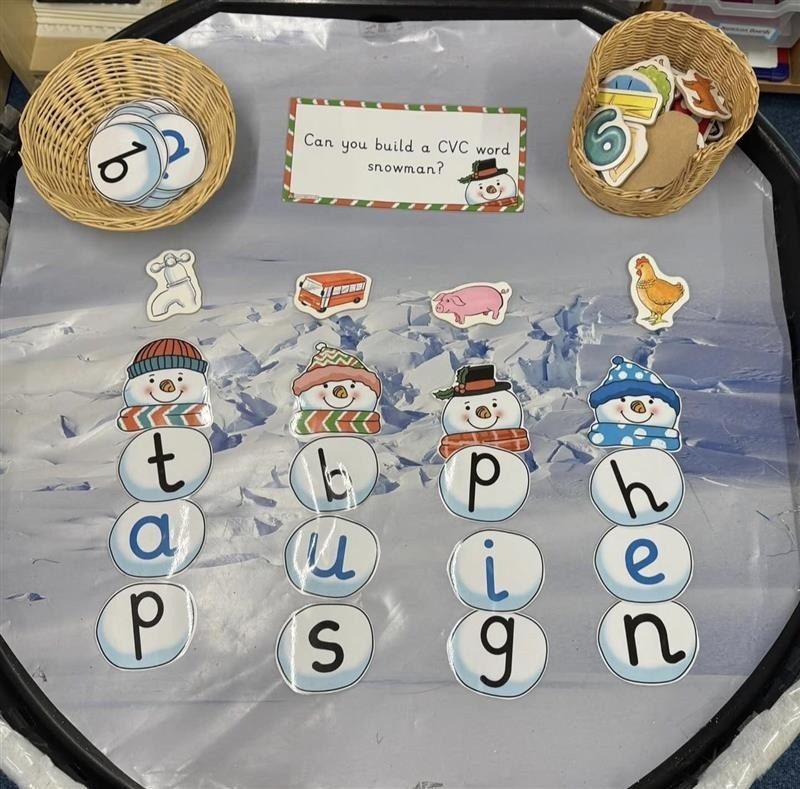
‘As kids grow, tuff trays evolve into a platform for imaginative,
purposeful play – think small-world scenes, science experiments or early
maths and literacy practice. While toddlers focus on sensory discovery,
older children apply reasoning, problem-solving and creativity, turning
play into structured learning that fosters independence and
confidence.’
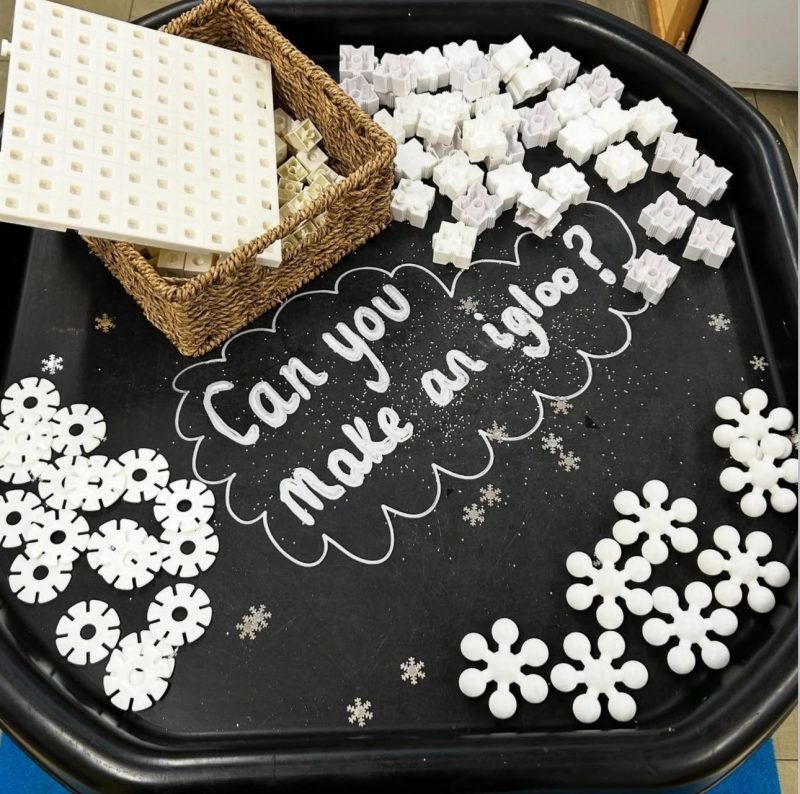
These six tuff tray ideas for indoor winter play are perfect for turning any space into a festive, hands-on wonderland.
Snowman building: Fill the tray with cotton wool balls, small
buttons, fabric scraps and orange paper for building mini snowmen. Add
accessories like hats, scarves, and mittens to boost imaginative play.
Santa’s workshop: Set up a festive arts and crafts station with glue,
glitter, pom-poms and coloured paper. Encourage kids to create
decorations or cards while improving creativity and hand-eye
coordination.
Reindeer food: Combine oats, glitter and small plastic reindeer
figurines for a magical sensory experience. Kids can mix and scoop to
create their own ‘reindeer food’ to leave out on Christmas Eve.
Christmas cookie decorating: Use pretend cookies (playdough or
cut-out cardboard) with toppings like coloured beads, sequins, mini
buttons and icing (using white playdough). Kids can decorate their
cookies while learning shapes, colours and patterns.
Winter forest adventure: Create a snowy forest scene with pine cones,
fake snow, animal figurines and holiday decorations. Kids can use their
imagination to tell winter adventure stories, developing social and
language skills.
Candy cane hunt: Hide plastic or wooden candy canes in a tray filled
with shredded paper, fake snow, or rice. Kids can practice counting and
fine motor skills as they search and collect candy canes. For an extra
challenge, they can sort by colour or size.
Tips to make a good tuff tray
Choose a theme or focus
Pick a theme like sensory play, nature, maths, or seasonal fun. A
clear focus keeps learning on track while making playtime enjoyable.
Use varied materials
Mix textures and colours, sand, water, rice, or fabric, to engage
children’s senses. Tools like spoons or cups encourage manipulation,
sorting, and experimentation, all while building motor skills and
sparking creativity.
Encourage open-ended play
Avoid giving too many instructions! Let your child explore,
experiment, and use their imagination on their own terms. The goal is
discovery and creativity, and adding strict rules can limit the
independence and problem-solving skills.
Rotate and refresh
Change up materials, themes, and activities to maintain interest.
Seasonal trays (like Christmas or Easter) are a great way to introduce
fresh, exciting ideas.
Support skill development
Consider the skills you want to nurture – scooping, counting, or
building – and incorporate items that encourage those abilities. Simple
tools like a spade or a cup can make a big impact on development.
Make it social
Tuff trays are perfect for cooperative play. Encourage siblings or
friends to join in to promote sharing, turn-taking and teamwork.
Collaborative play helps build social skills, communication, and
emotional understanding.