In an ideal world, every child should have the right to be introduced to the magical world of poetry. Sadly, it’s often overlooked in the race for screen time. Here, Dr Julie Blake, co-director of Poetry By Heart, the nation’s poetry speaking competition, explains why children benefit so much from poetry.
Published
You can always count on a poet to find the right words. When we asked the award-winning children’s poet, Joseph Coelho, why poetry matters for young children he hit all the nails right on the head:
He says: ‘It's through early contact with poetry during carer/child reading sessions that we come across the onomatopoeia of the mooing cow and the baaing sheep, it's through poetry that we learn rhyming ditties from friends in the playground as we ip dip who's it, and it's through poetry that we get to navigate difficult subjects and emotions.
‘It’s about developing a playful love of language, an easy way with words and an enjoyment of reading. It’s about the connections we make with the people we share these words with, the bonds and laughter. It’s about the working out of who we are, and the safe space for exploring everything the world might offer, scary and fun.’
‘It's through early contact with poetry during carer/child reading sessions that we come across the onomatopoeia of the mooing cow and the baaing sheep...'
As the mum of one young Poetry By Heart competition finalist said:
‘In a world where we worry about our children, about their mental health
and the peer pressures they face, I’m learning that poetry offers us
hope, in the form of a creative, empowering and liberating social
contagion.’
Teachers think poetry is important too. This is how Robert Panichi of the William Murdoch Primary School describes it:
‘One of the benefits of taking part in Poetry By Heart is seeing our
children develop their oracy and confidence skills. They are becoming
more articulate, able to express themselves and simply find their
voice.’
So, poets, parents and teachers all think it’s important. The trouble
is that poetry can be the Cinderella of reading. Poets aren’t generally
as high-profile as picture book authors, and parents and caregivers
often feel less comfortable with poetry. After all, if you didn’t get
much of it as a child, how are you supposed to know where to start?
This is where Poetry By Heart can help! It’s all about opening up
poetry to everyone: children mostly, but also to teachers, librarians,
parents and caregivers. We want everyone to develop confidence with
poetry in an enjoyable, accessible and engaging way. To do this, we
invite children to choose a poem, learn it by heart and perform it out
loud for others to enjoy.
Our mission is to empower teachers, librarians and support staff in
schools to make the magic happen in classrooms, libraries and school
halls across the country. We do this by providing poetry resources and
teaching materials, including our website with timeline anthologies of
poems to share and explore.
To give all this activity an exciting life beyond school, we run a
competition for speaking poetry with a fun-filled festival and Grand
Finale at Shakespeare’s Globe in London.
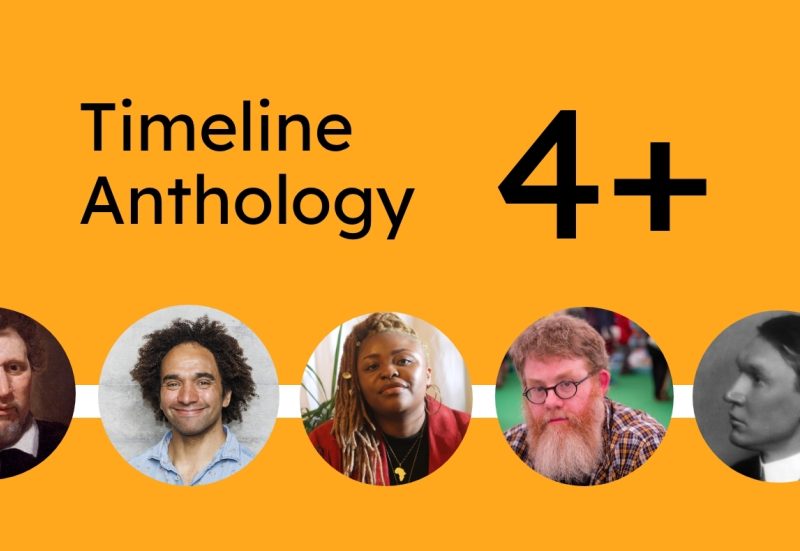
This year we’re launching a new timeline anthology of poems for
children in Reception and Key Stage 1. Exploring the new 4+ timeline,
you’ll find poems that are familiar, fresh discoveries and neglected
treasures. You’ll come across poets you’ve heard of and others you may
not have, with all kinds of diverse voices, now and across time.
Each poem has its own page on the website, with audio and video
wherever possible, an activity to lead you and your child into the poem,
and a short biography of the poet. We’re busy adding filters to the
timeline so you can choose to explore funny poems, animal poems, poems
about family, food poems, or whatever takes you and your child’s fancy.
If you’re not quite sure where to start, here are nine steps to help you find and share a poem.
1. Find a poem you connect with. It might remind you of a memory, a
family member, or something else you’ve seen, heard or read. It might
make you laugh, feel hungry, relax or surprise you.
2. Don’t be worried if you don’t know exactly what the poem means.
Poems are often written to ask questions, not answer them, and these can
be great starting points for conversations with your child.
3. Fit poems into small pockets of time. Poems are often short, which
makes them perfect for busy families! Whether it’s at the breakfast
table, at teatime or part of a bedtime ritual, find a time that works
for you.
4. Make it special. This is a little gift from you to your child: try to
remove other distractions so that you’re both fully focused on each
other.
5. Read the poem out loud multiple times before you share it with
your child – if time allows -–so that you can think about how fast or
slow you want to read certain parts, how loud or quiet, where you could
pause, where you could use different voices. Experiment and have fun
with it.
6. Use your own, authentic speaking voice including your personal,
regional or cultural speech habits – rather than using an artificial
‘poetry voice’. It’s important that your child hears you in this poem.
7. Honour the words of the poem – they’ll do most of the work for
you! Start with the meaning of the words, and don’t worry too much about
the line breaks and rhythm. Aim for a natural pace that isn’t too
sing-song.
8. Pay attention to the sounds of the poem. Help your child hear how
the words work together by highlighting the rhymes, sound patterns and
echoes between words. Let the poem sing!
9. Share the poem over and over again. Repetition is hugely important
for developing language, plus it’s great fun. Over time, your child
will be able to join in too – perhaps they can take over certain voices
or lines!
Whatever you do, have FUN with poetry!
About Dr Julie Blake
Dr Julie Blake co-founded Poetry By Heart with then Poet Laureate Sir
Andrew Motion in 2012. She has been Director of the programme ever
since. She is Co-founder and Co-director of The Full English (Education)
Ltd, an artisan enterprise to re-resource English for the digital age.
Blake is a researcher and writer about poetry in education and the
history of poetry for children. She also creates digital and print
anthologies of poems for children and young people.
Poem of the Week email – a poem a week in your inbox with an activity
to help you and your child have fun with the poem
poetrybyheart.org.uk/poem-of-the-week