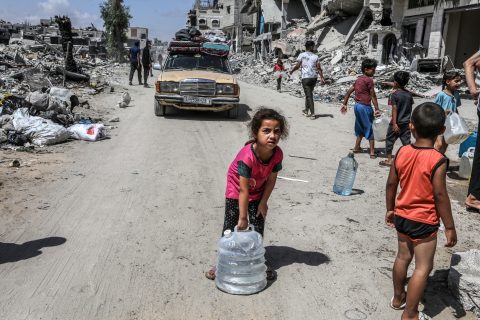
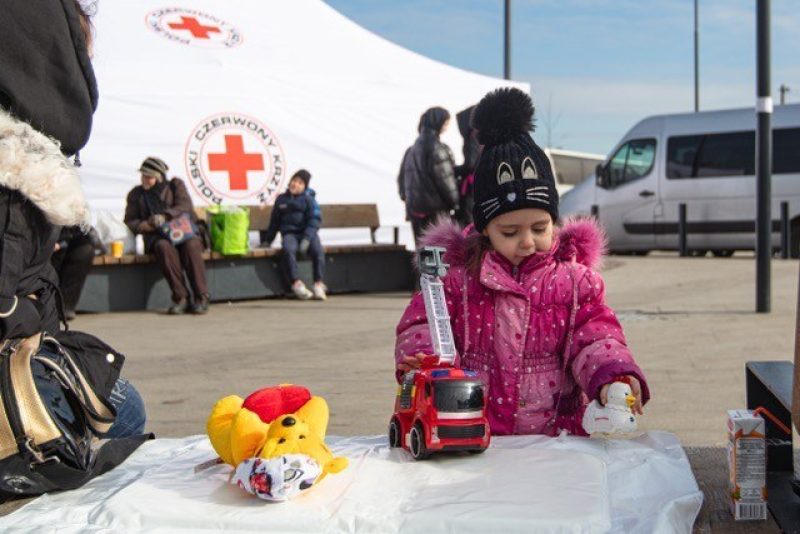
In the last few years, we’ve all had to face up to a lot of bad news. Some of this, especially talk of wars, such as those in Ukraine and the Middle East, is intensely worrying for adults. So imagine how the news must impact on children. Try as we might, it’s almost impossible to protect our kids completely from horrific scenes, such as children like our own who are injured, starving, or worse. So how do we talk to young children about situations, such as the war in the Middle East? Teacher Katie Harrison* has some useful advice.
Published
Conflict in the Middle East has dominated headlines recently, with talk of dangerous escalations and hardline disagreements amongst leaders. This news can be accessible to everyone, including young children, whether overhearing adult conversations, seeing snippets on TV or radio, or talking with peers in the playground. Parents have shared with our team at Picture News* that their young children have come to them with worries about the Middle East, asking: ‘Are we safe?’ and ‘Will this war happen where we live?’ If this happens in your home, try not to worry. We, as parents, can lean on techniques to support young children with tricky news, without causing fear.
Exploring an image
Start with a neutral image of typical life in an area of the Middle East, such as a busy street or children playing together, to ease your children into conversation. Avoid images showing conflict – instead, prompt a positive conversation about people and places, rather than associating the region with fear or violence.
Simply allowing children to talk freely about their lives or thoughts helps the conversation flow and feel easier...
Images can get children talking, so ask questions like: Does this
place look like where we live – how is it the same, different? Do you
think the children who live here go to school like you do? What might
they usually do before and after school?
As you explore the image, children may identify something they relate
to, or something that reminds them of a place they recognise or have
visited. In doing so, they can practise sharing knowledge and recalling
experience – and this supports the development of their early literacy
skills, such as speaking in sentences, active listening and taking turns
in conversations. Simply allowing children to talk freely about their
lives or thoughts helps the conversation flow and feel easier, important
as you navigate discussion of political upheaval and war without
causing fear.
Sharing news
Talk about what’s happening in simple, reassuring language. The
situation in the Middle East is complex and ever-changing, but for young
children, it’s okay to simplify what’s happening. You can be honest,
without needing to share in detail. You could explain the events in
simple, familiar terms:
Sometimes a leader of a country disagrees with the leader of another
country. If this happens, it can mean families have to change what they
normally do for a while to help them stay safe.
Some families living in a part of the world called the Middle East
(which is far away from where we live) are having to change what they
normally do. They might have to stay indoors for a while or stay at home
rather than go to school, and some people will move from their home to
another place. Families help to keep each other safe.
Emphasising recognisable themes like disagreements, families, or
typical daily routines can create a relatable springboard for
conversation, helping children access what’s happening in an
age-appropriate way.
Talking together
Remember the influence you have with your children in modelling
behaviour, language and reactions. Keep calm and be yourself – children
can sense (and potentially mirror) stress or fear.
As you ease into conversation let the children lead, whether it’s a
quiet moment over breakfast or sitting together playing. Allow children
to ask their own questions: being open and having a chance to speak up
can help alleviate fears. Use this as an opportunity to show children
that everyone can feel worried or scared sometimes, but talking can help
them feel better, let worries slip away, and support them to understand
what’s happening. Listen more than you talk; being heard in this way
can further build their trust in you, knowing if they feel worried,
you’ll listen.
Give children time to think, and don’t be afraid of silences.
Children may be quiet and deep in thought – this is a common way of
processing what they’ve heard. Try not to interrupt their silence, as
this may distract children from their chain of thoughts, creating a
missed opportunity to provide answers to a question they were thinking
of, or giving extra reassurance.
...show children that everyone can feel worried or scared sometimes, but talking can help them feel better, let worries slip away, and support them to understand what’s happening.
You may find that when you let children lead the conversation, they
will naturally flow onto a different topic as they settle and feel safe
from your guidance and support.
The current events in the Middle East are complex and unnerving, and
even the youngest children can access snippets of what’s happening. Yet
addressing the subject doesn’t need to be off-limits for young children.
Trust that you know your children best as you navigate what’s happening
in the news. With patience, attention and compassion, children can
learn from the world around them in a way that promotes curiosity, not
fear.
• Katie Harrison is a former teacher and founder of Picture News
which provides schools with resources to create engaging lessons about
current affairs, offering opportunities for children to learn about the
world around them.